What is Reformer Pilates and who is it for?
Short definition and how the reformer works
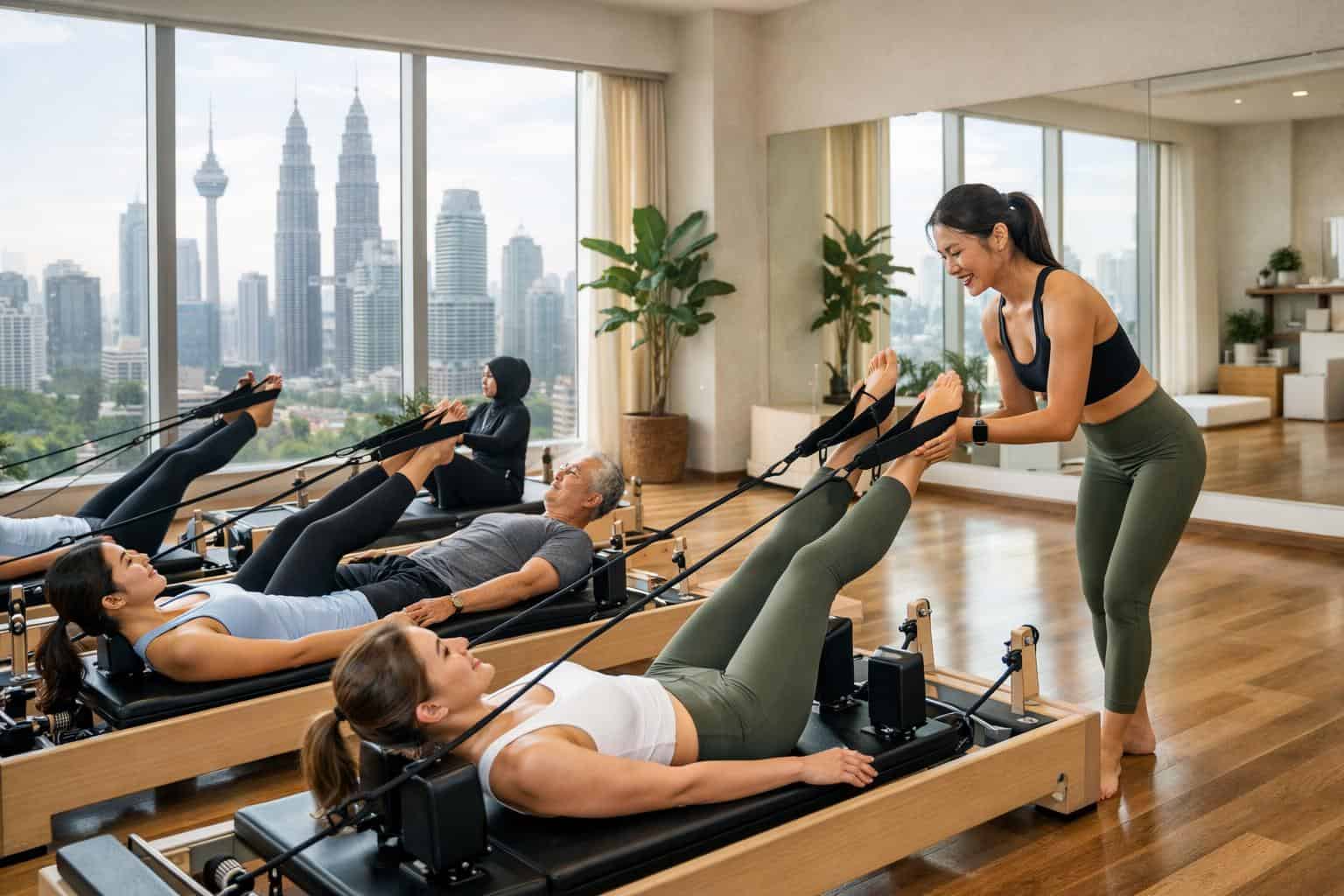
I like to describe the pilates reformer as a clever spring‑powered bed that turns bodyweight moves into resistance training with surgical precision — and yes, in the next few years this will be the image everyone in Kuala Lumpur conjures when they hear “reformer pilates KL.” The reformer uses a sliding carriage, adjustable springs and straps so you can push, pull and stabilise against controlled resistance.
Key benefits: strength, posture, mobility and rehab
Expect to get stronger without bulky muscle, improve posture that city life has slowly stolen, and gain mobility in stiff shoulders and hips; in my experience these gains compound quickly with consistent classes. Looking forward, I predict more KL studios will market reformer pilates as a hybrid of strength and rehab, especially for desk‑bound professionals.
How reformer differs from mat pilates and other workouts
Compared with mat pilates, the reformer gives variable resistance, more range of motion and a lower‑impact feel — so exercises scale differently and can feel closer to a strength session. In the future, reformer classes in KL will increasingly blur the lines with functional training, offering clearer progression pathways than a single mat class can.
Why Reformer Pilates is booming in Kuala Lumpur
City lifestyle, posture issues and demand for low‑impact training
KL’s busy commute, long office hours and café culture are creating a perfect storm of posture problems and a hunger for low‑impact workouts — this is why reformer pilates KL is taking off. I foresee more urbanites choosing reformer classes as preventive healthcare rather than an occasional hobby.
Studio variety in KL: boutique, rehab‑focused and heated classes
Already, the local scene is diversifying: boutique studios with designer interiors, physiotherapist‑led rehab clinics and even hot reformer rooms are popping up. Over the next few years, I expect this variety to expand, giving consumers clear niche choices based on goals and comfort.
How to choose the right reformer studio in KL
Location, schedule and commute considerations
When I pick a studio, convenience wins. Check how long the commute will be from your home or office — classes you can reach in under 20 minutes are the ones you’ll stick with. In KL’s future market, studios that optimise for short commutes and flexible class times will attract habitual clients.
Equipment quality, brand and hygiene standards
Not all reformers are created equal: reputable brands, well‑maintained springs and clean upholstery matter for safety and feel. I predict KL studios will increasingly advertise equipment brands and sanitation protocols as a trust signal to savvy clients.
Instructor qualifications, class ratio and teaching style
Instructor credentials and the student‑to‑teacher ratio define how personalised your session will be; I always ask about certifications and maximum class size. Going forward, expect more transparent listings of instructor qualifications and class ratios in booking apps.
Class formats and progression pathways offered
Look for studios that map out clear beginner-to-advanced pathways and offer mixed formats — that shows they care about long‑term progress. I predict loyalty will shift to studios that provide measurable progression, not just attractive branding.
Class types explained — which one suits you?
Private (1:1) and duet sessions: personalised progression
If you want laser focus and rapid improvement, private or duet sessions are ideal; I’ve seen beginners gain confidence faster with hands‑on cues. In KL, personalised sessions will become the go‑to for rehab clients and those training for specific goals.
Small group reformer classes: community + affordability
Small group classes strike a balance between expert coaching and cost‑efficiency — you get community energy without losing technique checks. I expect small group formats to dominate mainstream demand as they’re scalable yet still personable.
Specialty formats: hot reformer, rehab sessions and hybrid classes
Speciality classes — heated rooms, physio‑led rehab or hybrid strength‑pilates sessions — cater to niche needs and trends. In the near future, KL will see more themed reformer offerings, each targeting different lifestyle or therapeutic goals.
What to expect in your first reformer class
Arrival, consultation and studio check‑in process
On arrival, expect a quick health screening and a chat about your goals — studios use this to tailor spring settings and modifications. I always appreciate when check‑in is efficient; it hints the studio respects my time and will likely keep classes punctual.
Typical class structure: warm‑up, core repertoire, cool down
A typical session starts with breathing and mobilisation, moves into core and full‑body repertoire using the carriage and springs, and finishes with stretching and alignment work. Over time, classes will get more structured in KL with clearer teacher cues and class outlines to improve consistency.
Beginner exercises you’ll likely do and how intensity is scaled
Beginners usually start with footwork, pelvic curls, leg presses and short core sequences; instructors adjust spring tension, range of motion and repetitions to control intensity. I predict studios will increasingly publish beginner playlists so newcomers know what to expect.
Pricing, passes and how to get the best value
Drop‑in rates vs class packs vs monthly memberships
Drop‑ins are flexible but costly, class packs lower the per‑class price, and monthly memberships offer best value if you attend regularly. My rule: estimate realistic attendance and pick the plan that matches it — a common mistake is overbuying a membership you don’t use.
Trial offers, promotions and corporate packages to watch for
Watch for first‑timer trials, seasonal promos and corporate deals — these can drastically reduce your initial cost to try reformer pilates KL. Expect studios to compete on introductory rates to convert trial users into regulars.
Cancellation, no‑show policies and hidden fees to check
Always read the fine print: cancellation windows, late fees and transfer rules differ widely. In my experience, transparent studios win trust; I foresee more standardized, customer‑friendly policies in KL as competition heats up.
Safety, injuries and working with physiotherapists
Pre‑screening and communicating injuries to your instructor
Be honest during pre‑screening — tell your instructor about past injuries, surgeries or current pain so they can modify exercises. I always recommend bringing a brief medical history or letter from a physio if you’re in rehab mode.
How reformer helps rehab common issues (back, pelvic, knee)
Reformer work can improve spinal stability, pelvic floor awareness and knee alignment through controlled loading and precise cueing. I predict closer partnerships between KL studios and physiotherapy clinics, offering integrated rehab programs.
Red flags: when to stop and seek medical advice
Sharp, shooting pain, numbness, dizziness or worsening symptoms are red flags — stop immediately and consult a doctor or physio. In the future, I expect studios to provide clearer guidance about clinical referrals and red‑flag signs.
Preparing for class — what to wear, bring and avoid
Recommended attire, grip socks and jewellery tips
Wear fitted, breathable clothing that lets instructors see alignment; grip socks are recommended and jewellery should be minimal to avoid catching straps. I often tell friends that modest, non‑baggy attire will make your first few classes far less awkward.
What to bring: towel, water, and personal props
Bring a water bottle, towel and any personal props you prefer (like a small cushion for neck support). Expect KL studios to increasingly offer rental grip socks and eco‑friendly amenities as part of service upgrades.
Timing, eating before class and arrival suggestions
Arrive 10–15 minutes early to settle in and complete screening; avoid heavy meals within two hours of class but a light snack 30–60 minutes before is fine. I swear by a banana and water for mid‑day sessions — practical, portable and forgiving on the stomach.
Smart questions to ask before you book
Instructor certification, insurance and continuing education
Ask about the instructor’s pilates reformer certifications, liability insurance and any ongoing education they pursue — these signal professionalism and up‑to‑date teaching. In KL’s evolving market, this will become the baseline question savvy clients always ask.
Equipment maintenance, class size and student progression tracking
Check how often reformers are serviced, the maximum class size and whether they track student progress — these practical details affect safety and results. I expect more studios to adopt digital progress logs and client portals in the near future.
Trial lesson structure and refund/transfer rules
Clarify what a trial includes, whether fees are refundable and how credits or transfers work if your schedule changes. Transparency here shows the studio respects customers; my bet is that flexible, consumer‑friendly policies will win market share in KL.
4‑week beginner reformer plan (sample)
Week 1: Foundations — breathing, alignment and basic repertoire
Focus on diaphragmatic breathing, neutral spine awareness and basic moves like footwork and pelvic curl. I recommend 2 classes in week one to familiarise yourself with the reformer and build comfort.
Week 2: Build consistency — increase repetitions and tempo
Increase session frequency to 2–3 times, add repetitions to familiar exercises and begin paying attention to tempo control. Expect your movement quality to improve noticeably if you keep this tempo‑focused practice.
Week 3: Strength & control — add springs and varied angles
This week, gradually increase spring resistance and explore different leg and arm positions to challenge stability and strength. I suggest one private or duet session in week three to check technique as intensities rise.
Week 4: Consolidate — combine flows and set a training schedule
Combine learned sequences into longer flows, refine breathing and cadence, and set a sustainable schedule moving forward (e.g., 2–3 classes/week). By the end of week four you’ll have a clear idea of whether reformer pilates KL fits your rhythm and goals.
How to find and compare studios in KL quickly
Use booking apps, studio websites and Google Maps for hours & location
I rely on booking apps and studio websites to verify class times and locations quickly — Google Maps helps check commute times or parking options. Expect future integrations to show live class occupancy and next available trial slots for reformer pilates KL.
Read recent reviews, social posts and request trial classes
Recent reviews and social media give insight into teaching style, cleanliness and community vibe; always ask for a trial class if available. In a competitive KL market, studios that encourage trials and showcase client stories will stand out.
Compare schedules, class capacity and membership flexibility
Compare how many classes fit your week, the typical class capacity and how easily you can pause or transfer memberships. I foresee flexible, credit‑based systems becoming the norm as consumers demand more control over their fitness subscriptions.
FAQ — quick answers to common local questions
Is reformer pilates suitable for men and older adults?
Absolutely — reformer pilates KL is gender‑neutral and scalable for older adults with proper modifications; it builds functional strength and improves balance. I predict more male and senior representation in classes as studios actively broaden their marketing.
How often should I attend to see results?
Attend 2–3 times per week for visible improvements in strength and posture within 6–8 weeks; once‑a‑week can maintain gains but slows progress. In the coming years, personalised frequency recommendations will become common in class packs and memberships.
Can reformer pilates help with postnatal recovery or chronic back pain?
Yes, when supervised by trained instructors or physiotherapists, reformer exercises can support postnatal pelvic floor recovery and relieve certain types of chronic back pain through controlled strengthening. I expect integrated postnatal and pain‑management programs to expand across KL studios.
About the Author